
5 7 Owners Equity Financial and Managerial Accounting
5 7 Owners Equity Financial and Managerial Accounting
 admin
admin

Obligations due within one year are considered current liabilities, while those payable beyond one year are classified as long-term liabilities. Financial statement footnotes should clearly explain the nature and timing of the dividend and any restatement of prior-period per-share data to maintain comparability. Similarly, if a company raises capital to support a more aggressive dividend policy, that policy can drive retained earnings down faster than earnings can replenish them. So while a buyback typically does not immediately debit retained earnings, certain follow‑on transactions and legal rules can lead to retained earnings being reduced. The reduction occurs upon the declaration date, not the payment date, due to the recognition of the liability. The dividend declaration represents a formal commitment to distribute a portion of the earned capital.
Non-Current Assets
Often, the first place an investor or analyst will look is the income statement. The income statement shows the performance of the business throughout each period, displaying sales revenue at the very top. The statement then deducts the cost of goods sold (COGS) to find gross profit. For example, a positive change in plant, property, and equipment is equal to capital expenditure minus depreciation expense. If depreciation expense is known, capital expenditure can be calculated and included as a cash outflow under cash flow from investing in the cash flow statement. Any amount remaining (or exceeding) is added to (deducted from) retained earnings.
- Net income from the income statement flows into the balance sheet as a change in retained earnings (adjusted for payment of dividends).
- Perke Corporation purchased 80% of the stock of Superstition Company for $1,970,000 on January 1, 2025.
- On Slide 14, you can see Western Alliance’s concentration in loan loss loan category skews our ACL ratio lower relative to peers, reflecting the portfolio’s lower embedded loss content.
- While negative retained earnings can be a warning sign regarding a company’s financial health, an company’s retained earnings can also be negative for a company with a long history of profitability.
- Issuing certain classes of stock with required dividends—commonly preferred shares—creates recurring dividend obligations.
- It also supports deeper analysis when used together with the income statement and cash flow statement.
- CFI is the global institution behind the financial modeling and valuation analyst FMVA® Designation.
Good News! We have found the answer to this question!
A frequent misconception arises from confusing the Retained Earnings balance with a specific, available pool of cash. Retained Earnings is an accumulated total of profitability, not a liquid asset account that can be drawn down directly. Calculating the change in this account requires only three variables across a specified period. The formula begins with the prior period’s ending balance of Retained Earnings. If we postpone or slow that down and the LFI threshold is not raised, then we put ourselves at risk of impeding our total loan and deposit growth.
Does issuing stock increase retained earnings? Quick Guide
Nearly all public companies report a statement of stockholders’ equity rather than a statement of retained earnings because GAAP requires disclosure of the changes in stockholders’ equity accounts during each accounting period. It is significantly easier to see the changes in the accounts on a statement of stockholders’ equity rather than as a paragraph note to the financial https://one.growlence.com/2021/08/25/tax-assurance-accounting-service-firm-in-dallas/ statements. The statement of owner’s equity demonstrates how the net worth (also called equity) of the business changed over the period of time (the month of June in this case). Since this is a brand-new store, the beginning value of the business is zero. During the month, the stockholders invested $12,500 and the business had profitable operations (net income) of $4,582.
does issuing stock increase retained earnings? Quick Guide

Some jurisdictions impose legal capital rules that restrict distributions (including dividends) based on capital accounts and retained earnings adjusted for treasury stock. For example, a state corporate code may prohibit dividends if they would cause net assets to fall below stated capital. The question does treasury stock affect retained earnings appears frequently when companies repurchase their own shares.
3 Earnings per share and per-share metrics
The second category is earned capital, consisting of amounts earned by the corporation as part of business operations. Typically, financial statements include a statement of retained earnings that sums up how this account has changed in the current period. Conversely, dividends and net losses (when expenses exceed revenue) reduce retained earnings. Overall, we delivered solid operating leverage this quarter, with net revenue growing nearly 9%, which outpaced sub-3% growth in noninterest expense.
On Slide 14, you can see Western Alliance’s concentration in loan loss loan category skews our ACL ratio lower relative to peers, reflecting the portfolio’s lower embedded loss content. Total criticized assets increased negligibly and remained at approximately $1.7 billion, which we expect to be the high watermark for this credit cycle and to drift downward in coming quarters. Our liquidity position and capital base both remain stout and able to support our solid and improving PPNR tangible book value and total shareholder return. Earlier this week, we announced plans to unify 6 legacy division bank brands under the Weston Bank brand by year-end. These brands have operated under the Western Alliance Bank charter for over a decade. So this action will simply present a unified marketing present emblematic of the much larger national bank Western normal balance Alliance has become.

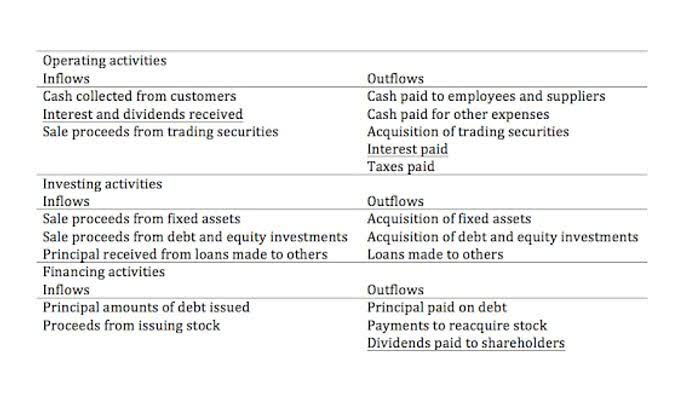
This account is positioned directly beneath the liabilities section and alongside other equity components like Common Stock and Additional Paid-In Capital. The balance is governed by Generally Accepted Accounting Principles (GAAP), ensuring consistent reporting across all publicly traded firms. Explore the function of Retained Earnings as accumulated earned equity, its calculation mechanics, and its critical separation from paid-in capital. According to the provisions in the loan agreement, retained earnings available for dividends are limited to $20,000. Companies formally record retained earnings appropriations by transferring amounts from Retained Earnings to accounts such as “Appropriation for Loan Agreement” or “Retained Earnings Appropriated for Plant Expansion”. Even though some refer to retained earnings appropriations as retained earnings reserves, using the term reserves is discouraged.
Accounts Receivable

All of this information pertains to publicly traded corporations, but what about corporations that are not publicly traded? Most corporations in the U.S. are not publicly traded, so do these corporations use U.S. A non-public corporation can use cash basis, tax basis, or full accrual basis of accounting. Cash and tax basis are most likely used only by sole proprietors or small partnerships. Both U.S. GAAP and IFRS require the reporting of the various owners’ accounts. Under U.S. GAAP, retained earnings these accounts are presented in a statement that is most often called the Statement of Stockholders’ Equity.
Primary accounting methods for treasury stock
And the last thing I’ll say is when we take in these properties to OREO, they’re at the current valuation values less liquidation costs. Balance Sheet tab – Use thedrop-down to select the accounts to properly included on thebalance sheet. The unadjusted and adjusted balances will appear foreach account, based on your selection. Income Statement tab – Use thedrop-down to select the accounts properly included on the incomestatement. The unadjusted and adjusted balances will appear foreach account based on your selection. Financial models use the trends in the relationship of information within these statements, as well as the trend between periods in historical data to forecast future performance.


